Is It Safe to Travel in Kashmir?

Updated: Oct 24, 2025

Our driver was going so fast that when he hit that proverbial and inevitable bump in the road, I flew up, off my seat, felt my head smash into the roof of the car, and then came plummeting back down—hard.
It was the last straw. This had to stop.
Less than an hour earlier, our ride into the mountains outside Srinagar in the infamous state of Kashmir had started off normally enough. Which is to say our driver put the pedal down, honking and weaving through what seemed to me like impenetrable traffic. But he penetrated it.
It was terrifying. It was death defying. Which is to say, it was normal. For India.
But eventually I realized that this ride was different. It wasn’t the usual brand of Mario Kart-style driving. Oh no. This was Mario Kart: Mad Boss Level.
We were going too fast.
The driver hit a bump and we all flew into the air.
I got the driver’s attention and asked him politely to slow down.
He gave me the India head bobble . . . and sped up a little.
But on that last bump, daughter 2 and I both smashed our heads violently into the roof of the car.
It hurt.
I dropped the politeness from my voice, and in in my most authoritative “dad voice” I told the driver to:
Slow.
Down.
Now.
I didn’t raise my voice. But I didn’t have to. There was a weight to it. Gravitas. And just a touch of a feral growl.
The driver slowed down.
And then we learned why he had been driving like Princess Peach on speed.
Another car caught up to us . . . and forced us to the side of the road.
We pulled over. The driver got out. Four men got out of the car that had bullied us to a stop and started yelling at our driver.
And then, one of the four men looked up and saw us sitting in the car.
He broke off from the group and approached the car.
I got ready. I didn’t know for what. I was ready for anything. Except maybe what the man actually said.
He walked right up to the window of the car, looked at us, and, in a clear, loud voice he said, “This has nothing to do with you! We hope you have a wonderful time in Kashmir!” Then he gave us a very friendly smile and wave . . . and then returned to yell at our driver some more.
It turned out our driver had, in his words, "gently bumped" the other car just before he picked us up. He was trying to get away from them. But after they caught up to us, and after some yelling and gesturing, our driver threw some money at the men, and that settled things.
Welcome to Kashmir.
A Brief History of a Beautiful, Broken Place

Kashmir isn’t just a place on a map. It’s a promise, a poem, a conflict, and a heartbreak—all layered into an impossibly beautiful valley.
When British India gained independence in 1947, it split into two countries: Hindu-majority India and Muslim-majority Pakistan. Caught between them was the princely state of Jammu and Kashmir, where a Hindu maharaja ruled over a mostly Muslim population. Faced with pressure from both sides, the maharaja signed an agreement to join India. That decision sparked the first of several wars, and decades of political dispute, armed conflict, and deep human suffering in stunning Kashmir.
Today, the region remains divided. Pakistan controls the northwest. India holds territory in the south, including the Kashmir Valley and its most important city, Srinagar.

And in the middle of that geopolitical standoff?
People.
Fishermen on Dal Lake. School kids walking home past soldiers. Vendors selling saffron and almonds. Protesters. Poets. Families trying to live their lives between curfews and headlines.
That’s the Kashmir we came to in May 2016—just after an incident that left a young protester dead and tensions high. We wondered if it was safe. We debated going at all. But eventually, curiosity—and something deeper—pulled us north.
Is It Safe to Visit Kashmir?
That’s the question everyone asks. And the honest answer is: it depends.
Peace here isn’t a given—it’s something that ebbs and flows.
When we visited in May 2016, it was just after a protest had turned deadly. Tensions were high. We checked the news constantly. We looked at reports on the situation from both the US and UK governments. We debated canceling. And when we finally did arrive, we did so with our eyes wide open.
Things were very peaceful when we were there. We didn't have a single security concern, outside of the crazy driving. However, one of the reasons for that is the armed guards everywhere. Srinagar, especially, feels like occupied territory. Soldiers with weapons were everywhere. Large machine gun placements sat on city corners. Military checkpoints look at your permits when you are out in the mountains.
The situation led to many discussions among my family about whether “peace” was just the absence of conflict . . . or something more.
The people of Kashmir are special—kind, warm, curious, and deeply tired of being asked if their home is dangerous. We were welcomed. We were told by many locals that what they really wanted was for international tourists to come back to Kashmir (the vast majority of tourists in Kashmir when we visited were Indian tourists).
So, just like the man in the car that ran us off the road, the people of Kashmir were very engaged in making sure we enjoyed Kashmir.
And let me tell you, we did.
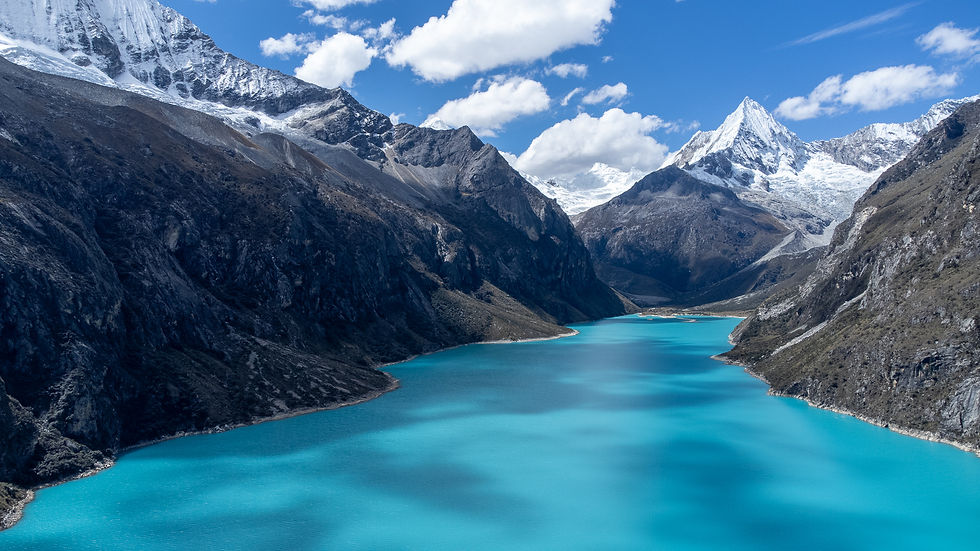
Kashmir is one of my favorite parts of India. We spent just over a month there. We had fantastic experiences. We saw stunning scenery. And we met people that would have made travel to the region worth it even without the drop-dead-gorgeous scenery.
But Kashmir can be tricky. The calm can shift quickly. Protests can spark overnight. Internet access can disappear without warning. Soldiers with rifles cease to be the background and move to the forefront.
So—is it safe?
Probably. Often. But not always. And not in the same way that other destinations are. You travel here with a different kind of awareness. You stay updated. You talk to locals. You listen closely to what isn’t said.
And you remember: for you this is a trip—because travel. For them, it’s home.



Comments