Taking the Overnight Train from Tashkent to Khiva

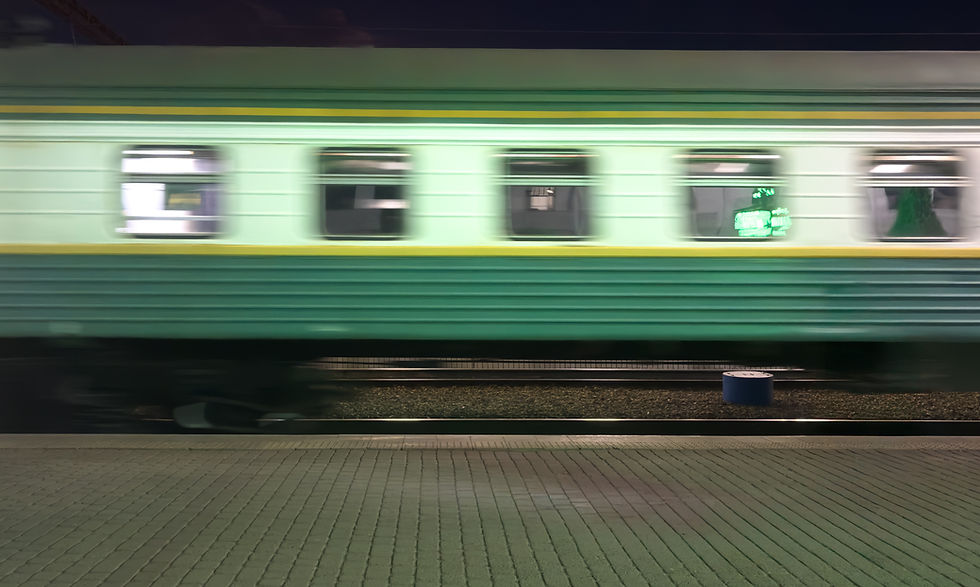
I think any traveler worth their salt loves an overnight train. There is something romantically nostalgic about train travel in the first place—the click-clack rhythm that fills the air and eventually becomes the soundtrack to everything, the gentle swaying that confirms you are in motion even when your eyes are closed. Trains announce that you are going somewhere, and then they make that act of going feel calm, deliberate, and strangely comforting.
They are also the antithesis of flying. Instead of being strapped into a narrow seat and slowly tortured for several hours, trains give you space. Actual, physical space. Hallways. Toilets you could (in theory) do a little dance in. And—most importantly—beds. Real beds. Or at least things that make a credible argument for being beds.
Trains are absolutely one of my favorite ways to get anywhere.
So when it came time to move from Tashkent to Khiva, the decision was easy. The only real question was which train: the fast daytime option, or the much slower overnight train. If you’ve read the previous paragraphs carefully, it will not surprise you that I chose the slow one.

Booking the overnight train from Tashkent to Khiva (and a few quirks)
I booked our tickets through the Uzbekistan Railways website for an overnight train departing Tashkent at 21:24 and arriving in Khiva the following morning at 11:10. On paper, it was exactly the kind of travel day I like: sleep while moving, wake up somewhere new.
And for the most part, it worked beautifully.
One oddity worth mentioning up front: we never once showed our passports. Not at the station entrance. Not at security. Not when boarding. Not on the train. Never. This may not be universal, and I wouldn’t plan on it, but that was our experience. Our tickets were checked. Our bags went through security (including a scan that would have spotted a drone had I been carrying one). Our passports stayed in our pockets.
We booked coope class (explained below), lower berths, and the cost was about 350,000 som ($29US) per ticket.

How to kill a very long travel day
The challenge with an overnight train isn’t the night—it’s the day leading up to it.
We were in Tashkent in July, and it was really hot. We had to check out of our hotel at 10:00 in the morning, but our train didn’t leave until 21:24. Under normal circumstances, we handle/survive Central Asian summers by disappearing into air-conditioning for the middle of the day. That was not an option here.
We tried to kill time with a museum and a tour of the Tashkent metro system, but by mid-afternoon it was clear that we were losing the battle. So we did what experienced travelers do when comfort is at stake: we threw a small amount of money at the problem.
We booked one night at the Royale Art Hotel, near the train station. For under $30 US, we got an AC-blessed glorious nap and a shower before heading out for the night. It was worth every penny.
The only downside was the advice.
The person at the front desk recommended that we arrive at the station at 20:00—an hour and twenty minutes before departure. This turned out to be wildly unnecessary. Security took about five minutes, and after that we sat in the waiting area for nearly an hour. The waiting area was perfectly fine for a train station, but nowhere near as comfortable as our hotel room had been.
In retrospect, we should have arrived closer to departure time. We also should have waited longer before boarding the train itself—but more on that shortly.
Classes, berths, and air-conditioning roulette
On this route, you have two main choices: sleeper class and coupe class. Sleeper cars have open six-berth arrangements. Coupe cars have four-berth closed cabins. The real deciding factor for us was air-conditioning.
Here is the thing about Uzbek trains in summer: you cannot be 100% sure the AC will work. But it seems far more likely to work in a coupe cabin than in a sleeper car. Since it was July, we chose coupe to maximize our odds.
The good news: the AC worked.
The complicated news: the AC has opinions. Very strong opinions.
First, the air-conditioning does not turn on until the train actually leaves the station. We boarded about thirty minutes early, and the thermometer in our cabin read 35°C. If you don’t speak Celsius, that translates roughly to “why is everything melting???!!!” It was hot. Aggressively hot.
So here is the one piece of advice I will state plainly: do not get on the train the moment it opens its doors. Stand nearby. Be ready. But wait until closer to departure unless you enjoy a little pre-departure sauna.
Second, once the train started moving, the AC swung violently in the other direction. It became cold. Very cold. Relentlessly cold. And there was no way to turn it down. Sleeping in our cabin felt a bit like being gently rocked inside a refrigerator.
We were saved only because later parts of our trip would take us high into the Pamir Mountains, so we had cold-weather clothes with us. We put them all on.
One pleasant surprise: each bunk had a working power outlet, and it had no problem charging our phones. We boarded fully prepared with power banks, but never needed them.
And one final note on berths: the lower bunks are much more comfortable than the upper ones. We booked the bottom berths, and after watching our fellow passengers repeatedly wrestle with ladders and gravity, we were very glad we did.
Staying comfortable overnight
This is still a train. Unless you are traveling with enough people to fill the cabin, you will share space with strangers. Hallway lights stay on. People talk. People laugh. People snore. Temperatures vary wildly from car to car and trip to trip.
Be ready for anything.
Bring a sleep mask. Bring earplugs. Bring layers. Bring enough food and water to get you through the entire journey. On our trip, no one ever came around selling food or drinks. I’ve read accounts where they do, so this may have been unusual—but it was our reality.
And don’t hold your breath for an on-time arrival. Every train we took in Uzbekistan arrived late. Our scheduled arrival in Khiva was 11:24. We rolled in sometime after 13:00. No one seemed especially bothered by this, which felt like a useful cultural cue.

Why the overnight train is still worth it
Despite the quirks, the waiting, the temperature drama, and the delayed arrival, I would do this train again without hesitation. We slept while the landscape changed. But that landscape: scrub desert. You aren’t missing spectacular scenery if you sleep from Tashkent to Khiva.
Travel days are often something to endure. Overnight trains, when they work, turn them into part of the experience itself. And even when they don’t work perfectly, they remind you why you chose this way of moving in the first place—because travel is not just about efficiency. Sometimes it’s about rhythm, patience, and letting the journey have a little clickety-clacking personality of its own.

Comments