Nuts and Bolts: Travel Tips for Visiting Bukhara

Updated: Feb 27

Nuts and Bolts posts give you the practical information you need, but without stripping away the humor, mishaps, and little victories that make real travel what it is. These aren’t just guides. They’re how we actually did it—mistakes, triumphs, and all.
This page has some travel tips for visiting Bukhara, Uzbekistan, to aid in planning your own trip. I travel mainly with my wife, and we love to simply wander and eat when we explore a new place. We were in Bukhara in July, 2026. If your trip to Bukhara is significantly longer/shorter/with a different focus, you may have a very different experience.

The year was 1220.
The true Khan of Khans stepped into the city square, Bukhara burning behind him.
This was Genghis Khan at the height of his power, the man whose armies moved like a natural disaster across Central Asia. Cities that resisted were erased. Libraries burned. Minarets toppled. The world was being remade through fire and fear, and Bukhara—ancient, wealthy, confident in its own importance—had just learned that confidence was no defense.
Smoke hung in the air. The sounds of destruction echoed behind him.
And then he looked up.
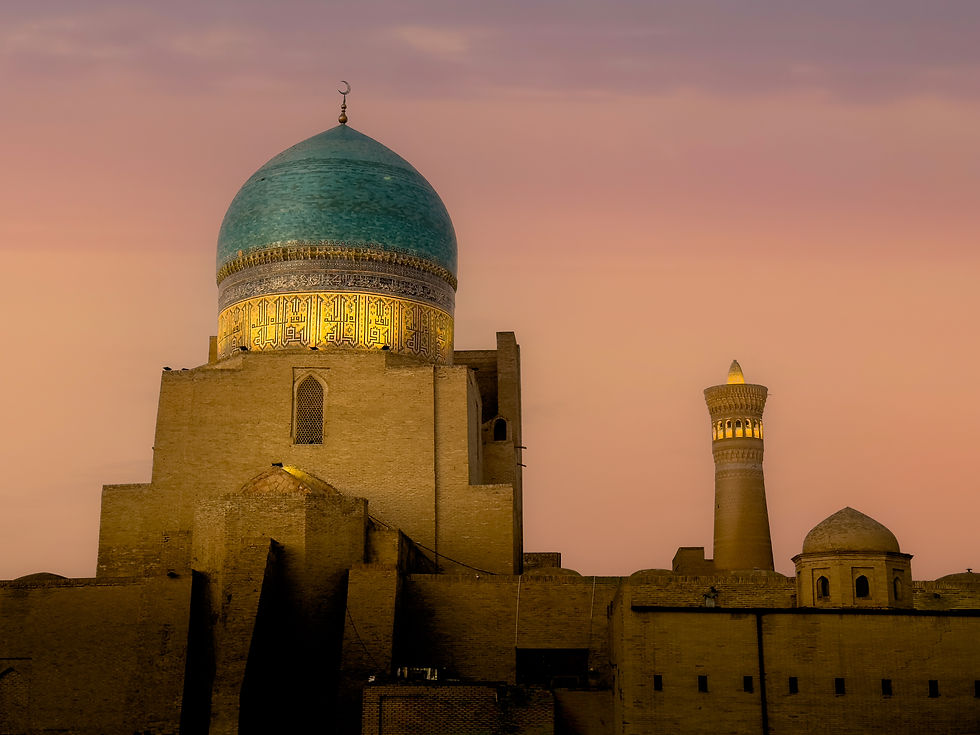
Rising above the square was a single structure still standing: the Kalon Minaret. Tall, slender, impossibly elegant. Its brickwork caught the light even as the city around it collapsed. The ruthless Khan stopped, removed his helmet, and bowed his head—not in submission, but in recognition. This, he decided, was something worth sparing.
Everything else would be destroyed.
The minaret would remain.
That is the story. And now, having stood in that place and looked at the beauty of the Kalon Minaret . . . I believe it.
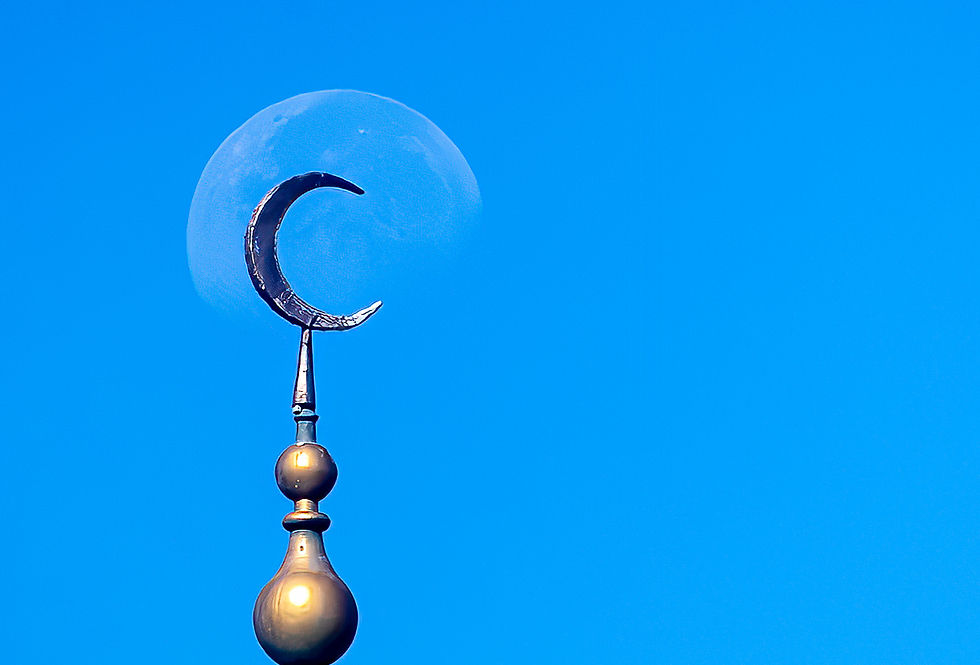
Travel Tips for Visiting Bukhara: Weather
Bukhara sits squarely in the Uzbek desert climate sweet spot—which is to say, it is unapologetically extreme.
Summer (June–August)
We were in Bukhara in summer, and it was hot in the way that makes you question your life choices. Not vacation hot. Not beach hot. This is “why is the air attacking me?” hot. Daytime temperatures regularly climb well above 40°C (104°F), and the sun reflects off centuries of baked brick like it has a personal grudge.
This is not a season for powering through all day. It’s a season for strategy. Early mornings and evenings are glorious, especially when the light hits the minarets and madrassas just right. Midday is for retreat—back to the hotel, into a museum, or anywhere with shade and air conditioning. Do this, and Bukhara in summer becomes manageable, even magical. Ignore it, and you’ll melt into the cobblestones like a cautionary tale.
Spring (April–May) and Fall (September–October)
These are the goldilocks seasons. Warm days, cooler mornings and evenings, and far less physical suffering. Spring brings a bit of green to the city’s courtyards and parks, while fall offers softer light and temperatures that make wandering the old city feel effortless. If you have flexibility, this is when Bukhara shines brightest.
Winter (November–February)
Winters are cold but generally dry. Snow is possible, though not guaranteed. Temperatures hover around freezing, especially at night, but the payoff is near-empty streets and a version of Bukhara that feels quiet, contemplative, and deeply atmospheric.
No matter when you come, Bukhara rewards travelers who work with the climate rather than against it. Rise early. Rest when the sun is strongest. Wander again as the day softens. The city has been doing this dance with the weather for a thousand years—it helps to follow its lead.

Getting to Bukhara
Bukhara sits right in the middle of Uzbekistan’s classic Silk Road triangle, which makes it easy to reach—and easy to pair—with the country’s other highlights. Whether you’re coming from Tashkent, Khiva, or Samarkand, you have a few solid transportation options, each with its own personality.
Train
The train is the most straightforward option between Tashkent and Bukhara, and between Samarkand and Bukhara. Uzbekistan’s rail network is modern, reliable, and surprisingly comfortable. High-speed train tickets are reasonable priced (and can be purchased on Uzbekistan Railways website), connect Tashkent and Samarkand to Bukhara, and in theory only take a few hours. We took the high speed train from Bukhara to Samarkand. The trip was supposed to take about an hour and forty minutes. Instead it took three and an half hours.
If you value comfort, predictability, and air conditioning that actually works, the train is the easiest choice. Just book in advance, especially during peak travel seasons or holidays.
There is no direct train between Khiva and Bukhara, so if you’re coming from Khiva, you’ll need to look at road transport.
Shared Taxis and Marshrutkas
If you’re feeling flexible, patient, and at least mildly curious about how locals actually move around Uzbekistan, shared taxis and marshrutkas (minibuses) are another common way to get to and from Bukhara.
Shared taxis usually operate on fixed intercity routes (Bukhara–Samarkand, Bukhara–Khiva, Bukhara–Tashkent), but they don’t leave on a schedule. Instead, they leave when full. You’ll typically find them clustered near bus stations or informal transport hubs, and a driver (or helpful intermediary) will ask where you’re going, quote a per-seat price, and then usher you into a car already half full of strangers. Prices are generally cheaper than hiring a private car, faster than marshrutkas, and still quite reasonable by international standards. Comfort varies. Legroom is negotiable. Air conditioning is a hope, not a guarantee. In fact, better just forget about AC.
Marshrutkas are fixed-route minibuses that function somewhere between a bus and a group endurance exercise. They’re the cheapest option, run frequently, and are used almost entirely by locals. They also make more stops, take longer, and are less forgiving if you’re traveling with large luggage or tender knees. That said, they’re reliable, straightforward once you find the right route, and a perfectly good option if time isn’t tight and you want the full local experience.
In short:
Shared taxi = faster, more comfortable, slightly more expensive
Marshrutka = cheaper, slower, more… intimate
Neither option requires advance booking, both require a bit of patience, and both work best if you’re not trying to arrive anywhere at an exact minute on the clock. There are generally designated sections of the city these options leave from, and your hotel can tell you where to go to find them.

Private Car (with Driver)
Hiring a private car is the most expensive option, but it’s also the most flexible—and sometimes the most interesting.
We hired a private car when traveling between Khiva and Bukhara, and turned the journey into a full-day experience by stopping at several desert fortresses along the way. It cost us about $89 USD, which felt like excellent value given the distance, the stops, and the comfort.
A private car makes the most sense if you’re traveling as a couple or small group, want to stop en route, or simply don’t want to spend hours negotiating seats in shared taxis. It’s also the only realistic way to explore sites off the main rail corridor.

Which Should You Choose?
Choose the train for speed, comfort, and ease between Tashkent, Samarkand, and Bukhara.
Choose shared taxis/marshrutka if you’re on a budget and don’t mind a bit of chaos.
Choose a private car if you value flexibility, want to stop along the way, or are traveling from Khiva. Or, and I cannot stress this enough, if your wife is mildly claustrophobic and does NOT want to cram into the back seat of a marshrutka.
Bukhara is well connected, and getting in and out is rarely the hard part. The harder part is deciding how quickly you want to leave once you arrive.
Getting Around Bukhara
Bukhara is a wonderfully easy city to navigate.
The historic center—where most travelers spend their time—is compact and highly walkable. The major sights are clustered close together, and wandering on foot is not just practical, it’s part of the experience. Narrow streets, shaded courtyards, quiet madrassas, and sudden openings onto grand squares all reveal themselves best at walking speed.

That said, Bukhara is larger than the old city, and some useful places—restaurants, hotels, and quieter neighborhoods—sit farther out. For anything beyond a comfortable walk, Yandex Go is your best friend.
The Yandex ride-share app works extremely well in Bukhara. Cars are easy to find, rides are inexpensive, and the system is reliable. We used it constantly, and it removed almost all friction from getting around the city. Compared to negotiating with street taxis, Yandex is faster, cheaper, and blissfully drama-free.
As a bonus, Yandex Maps is more accurate in Central Asia than Google Maps or Apple Maps, especially for walking routes. If you plan to explore on foot—and you should—having it downloaded will save time and frustration.
Between walking and Yandex, getting around Bukhara is refreshingly simple. The city doesn’t fight you. It invites you to slow down, wander, and discover.
Where to Stay in Bukhara for the Budget Conscious Traveler
The historic core is where the city’s atmosphere really lives, and staying close to it transforms the experience. Early mornings are quieter. Evenings are magical. And popping back to your hotel during the hottest part of the day becomes easy rather than a logistical headache.
We stayed at Nabibek Terrace, just a short walk from the Kalon Minaret and its surrounding square, and we loved it. The location was ideal—close enough to be immersed in the old city, but tucked just far enough away to be calm and restful. It made dawn walks to the mosque effortless and allowed easy retreats when the sun turned aggressive. If you care about light, wandering, and not constantly arranging transport, this area is hard to beat.
Another excellent option is staying near Lyabi Khauz, one of Bukhara’s most pleasant and lively areas. The pond, surrounding madrassas, and shaded cafes make it a natural gathering place, especially in the evenings. It’s a bit more social, a bit busier, and still very well positioned for exploring the old city on foot.
Wherever you stay, the key advice is simple: sleep inside or immediately adjacent to the historic center. Bukhara is at its best early and late in the day, and being able to step out your door straight into history—rather than into traffic—makes a noticeable difference in how the city feels.

What to eat in Bukhara
Bukhara is a good food city—not flashy, not experimental, but deeply satisfying if you like hearty, traditional meals and places that feel lived-in.
All the familiar Uzbek staples are here: plov, dumplings, soups, grilled meats, fresh bread. You won’t go hungry, and you won’t have to hunt very hard for something solid and comforting at the end of a long, hot day of wandering.
A couple of standouts for us:
JOY Chaikhana was excellent. Reliable, well-prepared food in a relaxed setting, and a place we would happily return to without hesitation.
Zolotaya Bukhara was also very good—classic Uzbek dishes done well, and a nice option when you want something that feels a little more established without being stuffy.
We tried to eat at Old Bukhara and Temur’s, both of which came highly recommended, but they were closed when we went. That’s travel. Sometimes the best recommendation is simply bad timing.
Not every meal has to be traditional, though. After weeks of Central Asian food, we ordered a perfectly good pizza from Bellissimo Pizza through Yandex Go, and it absolutely hit the spot. No shame. Travel is about balance.
One simple pleasure we loved: grabbing ice cream and sitting by the fountain at Lyabi Khauz in the evening. The ice cream itself isn’t going to win awards, but that’s not the point. The setting, the people-watching, and the cooling effect of the water make it a lovely way to end the day.
As with the rest of Uzbekistan, Yandex Maps is your best tool for finding food. It’s used far more heavily by locals than Google Maps, and the reviews tend to be more accurate and less inflated. If a place is busy with locals and has solid Yandex ratings, you’re probably in good hands.
Bukhara rewards simple choices: eat nearby, eat what’s fresh, sit down when you’re tired, and don’t overthink it.
What To Do in Bukhara
Yes, there are major sites in Bukhara—important ones—but what makes Bukhara special is how seamlessly those sites dissolve into daily life. You move from monument to market to mosque courtyard without ever feeling like you’ve left the story.
That said, here are the places that give Bukhara its rhythm.
Kalon Minaret, Kalon Mosque, and Mir-i-Arab Madrassa
This is the gravitational center of Bukhara. The Kalon Minaret dominates the skyline, visible from all over the old city, and somehow manages to feel both monumental and perfectly proportioned. The Kalon Mosque stands beside it, immense and restrained. When we were there, the mosque was closed for repairs, but even from the outside it commands respect.

Across the square, the Mir-i-Arab Madrassa is still active as a religious school. Visitors can enter the courtyard for a small fee, and it’s absolutely worth it. The space is calm, beautifully balanced, and one of the quieter moments you’ll find near the city’s busiest site.

Ulugh Beg and Abdulaziz Khan Madrassas
Facing each other across the street, these two madrassas make for one of Bukhara’s most visually satisfying pairings. Ulugh Beg’s is older and more restrained; Abdulaziz Khan’s is ornate and almost exuberant. You can feel the shift in artistic ambition just by turning your head. Both charge small entry fees, and both reward slow looking.

The Ark of Bukhara
The Ark is the city’s ancient fortress, rising abruptly from the surrounding streets. It’s imposing, historically important, and gives good context for Bukhara’s long political life. The entry fee is 60,000 som (about $5US).

The Toqi Domed Markets
Bukhara’s old trading domes are some of the most atmospheric spaces in the city. Designed to funnel breezes and keep temperatures down, they are both beautiful and functional.

Toqi Zargaron is the largest and most impressive, and the oldest of the markets. Jewelers still work here, and it’s easy to imagine centuries of commerce echoing under the domes.
Exit south along the pedestrian shopping street and you’ll reach Toqi Telpak Furushon, once a book market, later famous for hats and headgear. Nearby, you can still find a traditional smithy producing knives and tools the old way.
Toqi Sarrafon, originally the money-changing bazaar, rounds out the trio.
None of these require tickets. They’re part of the city’s circulatory system.
Chor Minor
This may be the most charming building in Bukhara. Small, quirky, and slightly off the main tourist flow, Chor Minor looks like something pulled from a children’s storybook. It’s no surprise it graces the cover of recent editions of Lonely Planet Uzbekistan. It won’t take long to visit—but you’ll probably smile the whole time.

Bolo Hauz Mosque
With its elegant wooden columns reflected in the pool out front, Bolo Hauz is one of the most photogenic spots in the city, especially in soft morning light. It feels intimate and human-scaled, despite its importance.

Ismail Samani Mausoleum
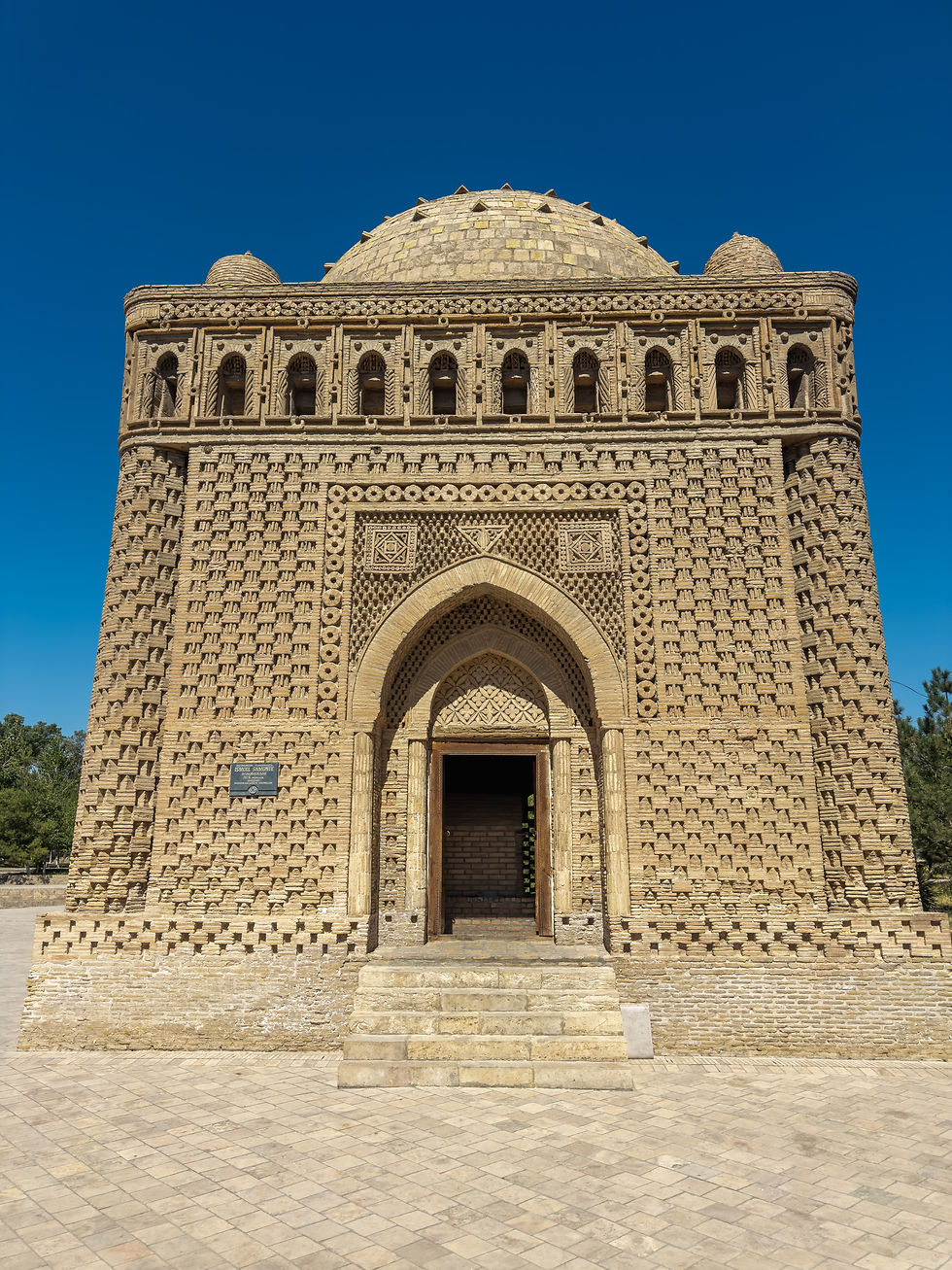
One of the oldest surviving Islamic structures in Central Asia, this mausoleum is a masterpiece of brickwork. The patterns shift as the light changes, and it rewards slow circling. It sits within a green park, making it feel almost contemplative.
Samonids Recreation Park
This park surrounds the Samani Mausoleum and is a popular place for locals to relax. Families gather here in the evenings, kids play, couples stroll. It’s a good reminder that Bukhara is not a museum—it’s a living city.
Central Bazaar
Less polished than the domed markets, the Central Bazaar is where daily life hums. Fruits, vegetables, bread, spices—it’s practical, busy, and very much for locals. Even if you don’t buy much, it’s worth a wander.
Bukhara works best when you let the spaces between these sites matter just as much as the sites themselves. Walk. Sit. Duck into courtyards. Let the call to prayer catch you mid-stride. The city reveals itself not all at once, but steadily, as if it’s decided you’re worth the time.
How Long to Spend in Bukhara
Bukhara is not a city that needs speed.
If you’re efficient and focused, you could see the major highlights in two full days. You’d hit the key madrassas, wander the markets, visit the Ark, and still have time for a couple of good meals and an evening stroll.
Most travelers will probably be happiest with three days. That gives you room to slow down a bit—time to explore without constantly checking the clock, to revisit places in different light, and to duck into quieter corners without feeling like you’re falling behind schedule.
We spent five days in Bukhara, and for us, that was perfect.
It meant unrushed mornings. Long breaks during the hottest part of the day. Multiple passes through the same squares just to see how they felt at different hours. Time to sit, watch, and absorb rather than just move on to the next site. Bukhara rewards this kind of lingering. The city doesn’t change quickly, but it does change subtly, and those shifts are easy to miss if you’re only passing through.
You certainly don’t need five days here. Some travelers would get restless. But if you enjoy slow travel, early mornings, and letting a place sink in rather than checking it off, Bukhara is an excellent place to take your time.
Dress and Behavior in Bukhara
Bukhara is a conservative city, but not an unfriendly one. A little awareness goes a long way, and the expectations are easy to meet.
In terms of dress, modesty is the guiding principle—especially around religious sites. You don’t need to cover every inch of skin or dress like you’re auditioning for a historical reenactment, but shorts that are mid-thigh or longer, shirts that cover shoulders, and generally loose, breathable clothing will keep you both comfortable and appropriately dressed. In the summer heat, light fabrics are essential. Long sleeves and pants can actually be more comfortable than shorts if they keep the sun off your skin.
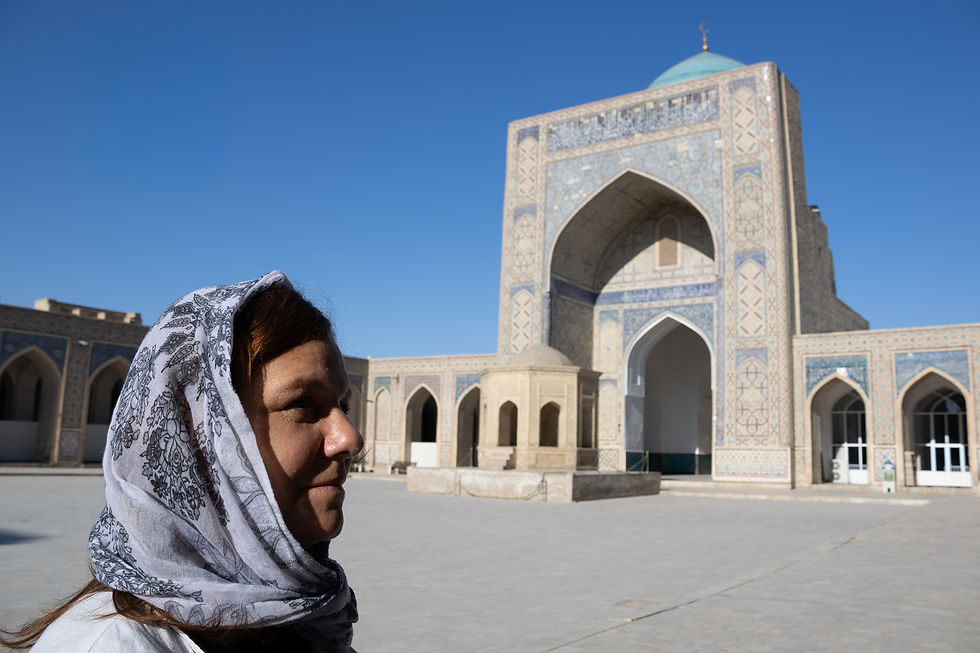
Women should consider carrying a light scarf. It’s useful for entering mosques or madrassas and also doubles as sun protection. Men should avoid sleeveless shirts at religious sites. None of this is heavily enforced, but dressing respectfully shows awareness—and respect tends to be returned.
In terms of behavior, Bukhara feels calm and measured. Loud voices, aggressive bargaining, or performative behavior stand out quickly. This is a city where people sit, talk, and watch the world go by. Matching that pace makes interactions smoother and more pleasant.
Photography is generally welcomed, but when photographing people—especially older residents or anyone engaged in religious activity—it’s polite to ask first or at least make eye contact and gesture. Most people respond warmly, and a simple smile goes a long way.
Finally, remember that Bukhara is not just a collection of monuments—it’s a living city. People work, pray, shop, raise kids, and rest here. Move through it with curiosity rather than entitlement, and you’ll find the city remarkably open and generous in return.
Bukhara isn’t a place you rush through, and it isn’t a place that needs to impress you quickly. Its power is cumulative. It settles in slowly, through repeated walks past the same minaret, through the way the light changes across brick and tile, through moments when you stop moving and simply sit.
What stays with me most isn’t any single monument—though there are plenty worth remembering—but the feeling of being allowed to linger. To wander without purpose. To return to the same square just to see how it feels at a different hour. To notice that the city hasn’t changed, but somehow you have.
That is why Bukhara works so well for travelers willing to slow down—not because it demands attention, but because travel here rewards patience, curiosity, and time, and because travel, at its best, isn’t about how much you see, but about how deeply you see it.


Comments